
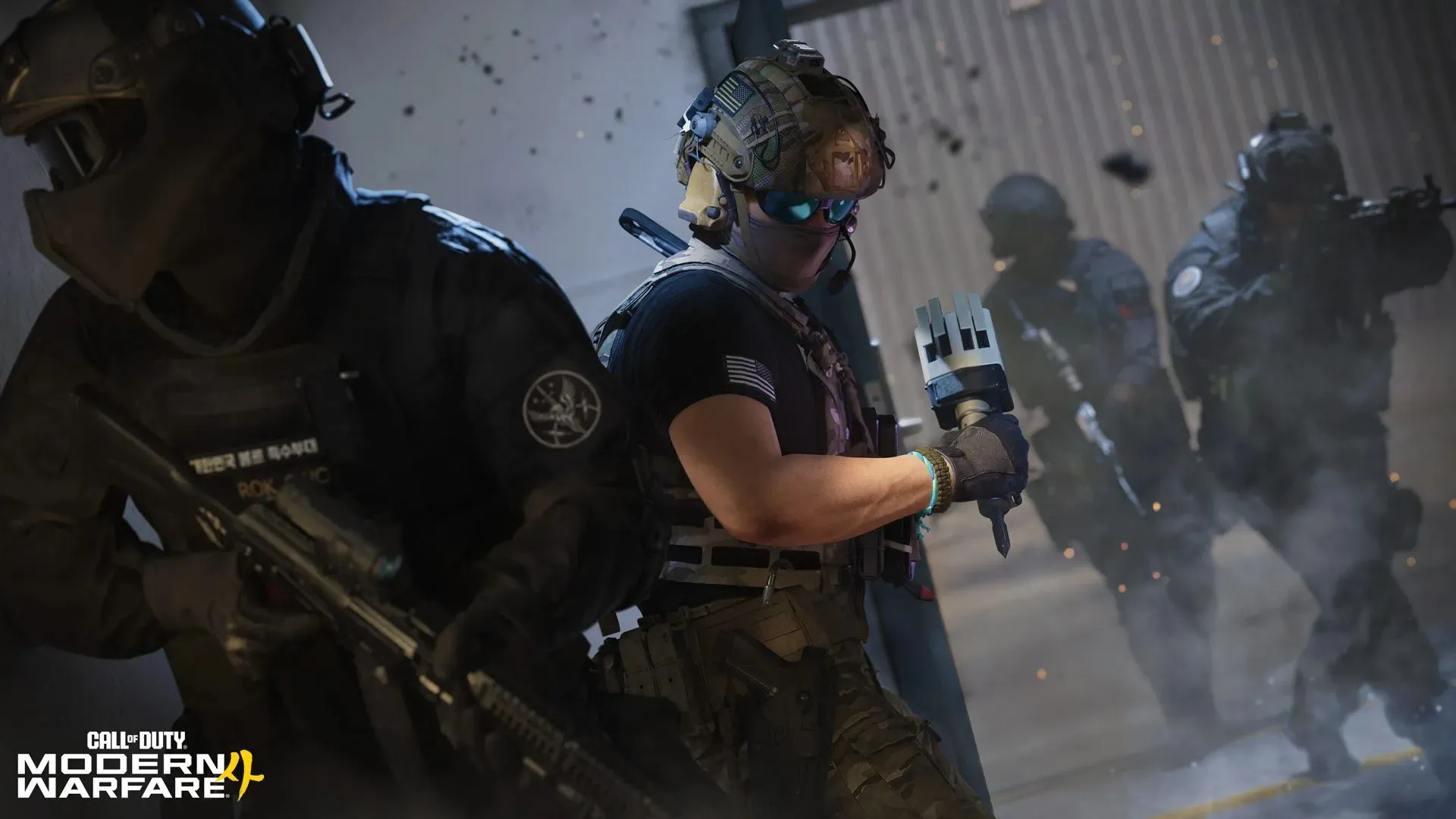
Activision lists four-minute rounds, a 300-point score limit, teams of up to six, side swaps, and Core and Hardcore variants. The Data Spike can be carried, thrown or passed. A planted Spike scores over time and earns a completion bonus.
Decide who carries and who clears
Name a carrier before the first pickup. Give that player a nearby teammate to clear the next corner and a second teammate to watch the route behind. This is a suggested squad structure, not a fixed game role.
Treat the Spike as a moving objective
Because the Spike can be passed, the carrier does not have to force every duel. If a defended lane is blocked, call the pass or turn back early rather than abandoning the objective in an exposed place.
Plant, then cover the abort route
A plant begins scoring, but opponents can stop the upload. After planting, move attention from the station itself to the approaches that give defenders a safe abort. Avoid stacking everyone on one angle.
Retake with a clock call
On defense, identify whether the planted Spike can still be reached in time. One player pressures the upload while another covers the likely trade. If you win the duel, move to the abort immediately rather than chasing a second fight.
Re-check the center after a reset
Activision says the Spike can reset to center after being left down, thrown out of bounds or successfully defused. Call the reset out loud; the next fight may begin away from the previous station.
Review one failed decision
After a round, record whether the problem was a late pickup, an uncovered carry, a plant without exit cover or a slow retake. Test one adjustment in the next match.
Official rules, independent practice
Map names, map settings, mode formats, round limits and equipment options come from Activision's October 21 launch overview. Plans and coaching prompts are this site's own suggestions. Verify playlist availability and any balance changes in the live game.